4,000 years of textile traditions with ARNE & CARLOS
At the edge of the Andes, where mountains rise in soft blues and greys and the light shifts like woven cloth, Peru unfolds as a tapestry of ancient stories. The air is thin, clear, and touched by incense and earth. And everywhere — in markets, in villages, in the hush of high plateaus — textiles whisper their long memory.
For more than 4,000 years, this material knowledge has shaped how life is lived and understood here. Along the coast, Paracas cultures created cloths of astonishing complexity — woven, embroidered, and dyed with a mastery that still feels almost unreal. These early textiles are not simply beautiful objects, but carriers of knowledge: of fibre, structure, colour, and belief. In Lima, at Museo Amano, this extraordinary textile intelligence is revealed with quiet clarity, offering a rare window into the depth of Peru’s earliest material culture.
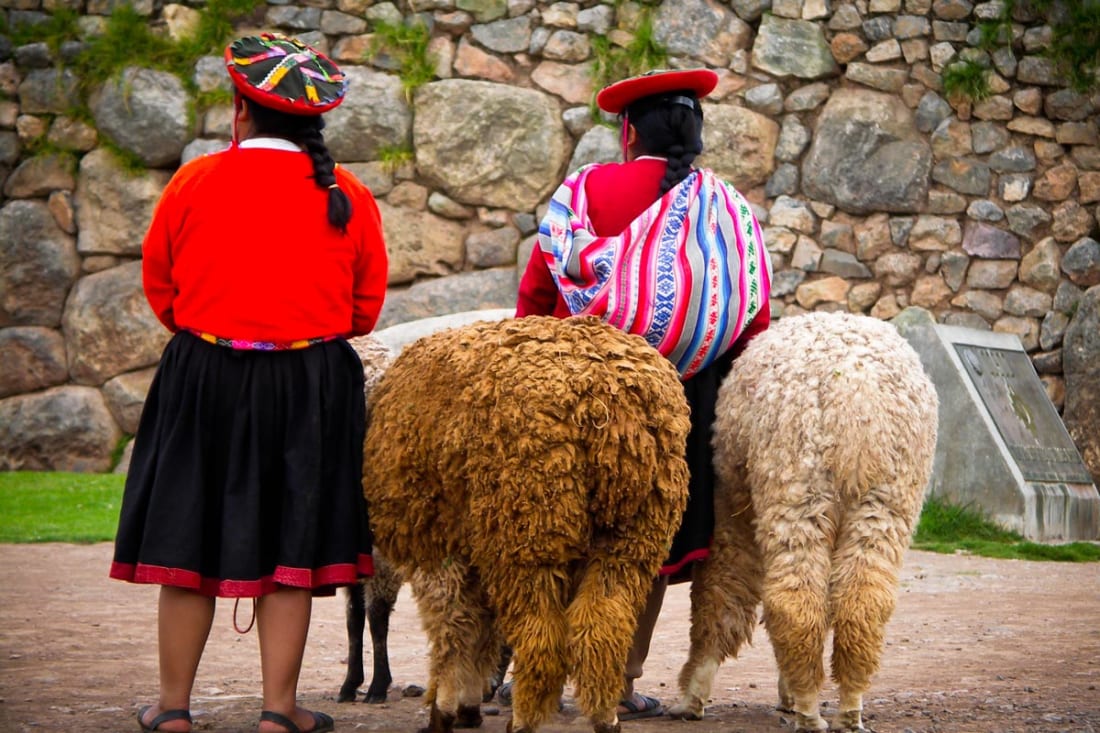
From the coast, the journey moves inland, where textiles become inseparable from landscape. In the highlands, fibre comes from alpaca and vicuña, animals adapted to altitude and wind, their wool spun into garments that balance warmth, durability, and beauty. Across the Sacred Valley, colour rises from the land itself — cochineal, plants, minerals — and patterns carry meaning rather than decoration. In villages and workshops, looms and spinning wheels follow rhythms refined over generations, and weaving remains a central way of recording knowledge, status, and belief.
This knowledge is not preserved as relic, but lived. On islands such as Taquile, high on Lake Titicaca, knitting remains part of daily life and social identity, learned early and worn with quiet confidence. Garments still speak — of belonging, responsibility, and place — just as they have for centuries. Here, textiles continue to bind community, landscape, and tradition into a shared language.
At the same time, Peru’s textile story continues into the present. In modern production mills such as Inca Tops, thousands of years of fibre knowledge meet contemporary technology. Alpaca and vicuña are transformed into some of the finest yarns in the world, guided by an understanding of fibre quality and behaviour that remains deeply rooted in tradition. This is continuity rather than contrast — ancient material intelligence expressed through modern excellence.
Threaded through this textile landscape are some of Peru’s most powerful places. Cusco, once the heart of the Inca world, reveals how textiles, architecture, and belief were deeply intertwined. Machu Picchu stands within this same understanding of material, structure, and spirit. And in Arequipa, the quiet intensity of Santa Catalina Monastery offers a contemplative counterpoint, where colour, space, and time seem gently held.
For us, Peru is inseparable from our own working lives. Over many years in the fashion industry, we designed our own knitwear collections and manufactured them there under our own brand, working at the highest end of the international market. Through this work, we formed a deep bond with Peruvian textile traditions and learned directly from exceptional masters of their craft. That knowledge — of fibre, material, and making — continues to shape how we work today.
This journey brings all of these threads together — moving through ancient textiles and living traditions, through landscape, community, and modern production. It offers a rare opportunity to experience Peru as a richly layered whole, where culture, making, and place are deeply intertwined, and where past and present continue to exist side by side.
 Photography © Amano Yarns 2026
Highlights:
- A continuous textile journey through time, beginning in Lima with an in-depth visit to Museo Amano and its remarkable pre-Columbian textile collection, and concluding in Arequipa with a visit to Inca Tops, where alpaca and vicuña fibres are transformed into some of the world’s finest yarns.
- A thoughtfully paced itinerary designed for comfort and acclimatisation, with three days in the Sacred Valley to adjust gradually to altitude, followed by two nights in Cusco in oxygenated rooms.
- Experiencing Peru’s dramatic landscapes, from coastal plains to high Andean valleys, including travel to the iconic Machu Picchu.
- The Titicaca Train journey through the Andes – an unhurried passage across the high plateau, with white tablecloth dining, Andean music, and carefully prepared meals served as the landscape slowly unfolds outside the windows.
- Visits to the Uros and Taquile Islands on Lake Titicaca, where knitting and textile skills remain part of everyday life and are worn with quiet pride.
- Discovering the extraordinary Santa Catalina Monastery in Arequipa, a vast and atmospheric architectural ensemble offering insight into Peru’s colonial art, colour, and spiritual history.
- Travelling and knitting in the warm company of ARNE & CARLOS, sharing inspiration, conversation, and the quiet pleasure of exploring Peru’s textile traditions together.