PROGRAM
B = Breakfast L = Lunch D = Dinner
Please note the program is subject to change
Day 1 – Arrival in Oslo | September 24, 2026 (D)
Arrive in Oslo by your own arrangements and check into Amerikalinjen, our hotel for the night. In the evening, we sit down together for the first time — a dinner with ARNE & CARLOS and fellow travellers, and a confident beginning to the journey ahead.

Day 2 – Oslo and embarkation | September 25, 2026 (B, L, D)
The day begins with a guided introduction to Oslo, a city where daily life and nature exist side by side. We visit Vigeland Sculpture Park, the Holmenkollen ski jump, and the Bjørvika waterfront, including the Opera House.
Lunch is served at Frognerseteren, set high above the city in forested surroundings. This is an area where Oslo residents head in winter to ski — a reminder of how closely the city is connected to nature and seasonal rhythm.
In the afternoon, we board the ship. After settling in, we are introduced to the Expedition Team. As evening falls, we gather in the panorama lounge and watch the city lights slowly recede as we depart Oslo.
Day 3 – At sea | September 26, 2026 (B, L, D)
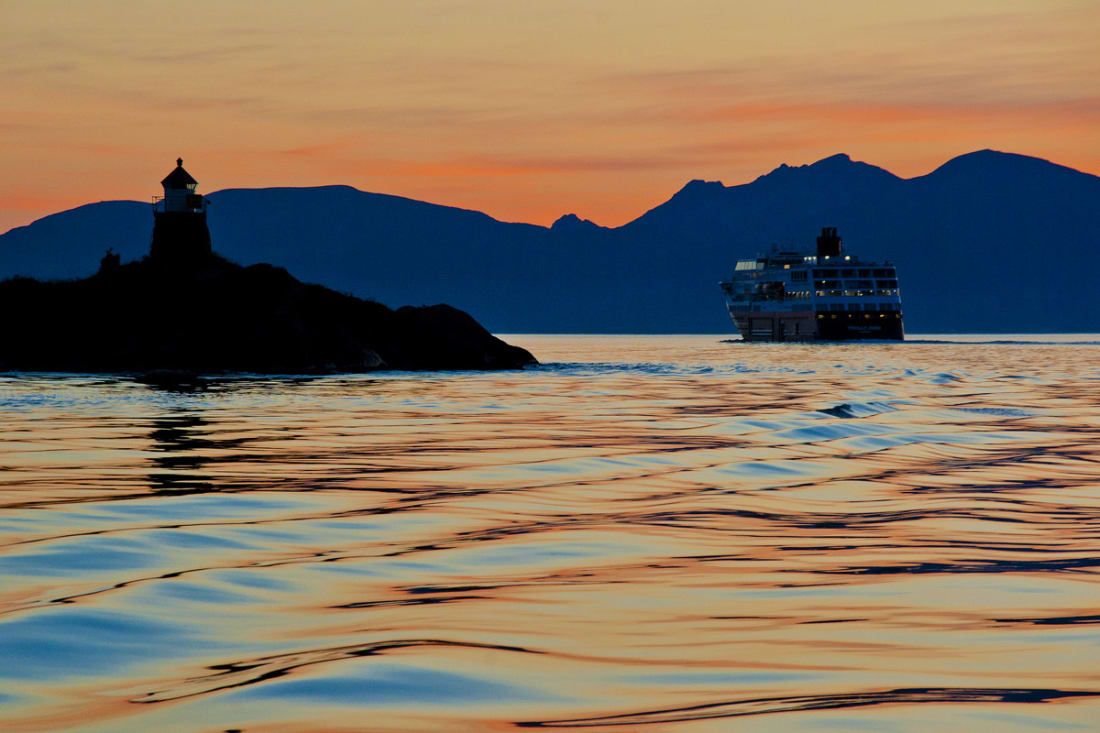
This first full day at sea is about settling in — to the ship, the pace, and to each other. There is no fixed agenda and no sense of needing to be anywhere, except with your knitting.
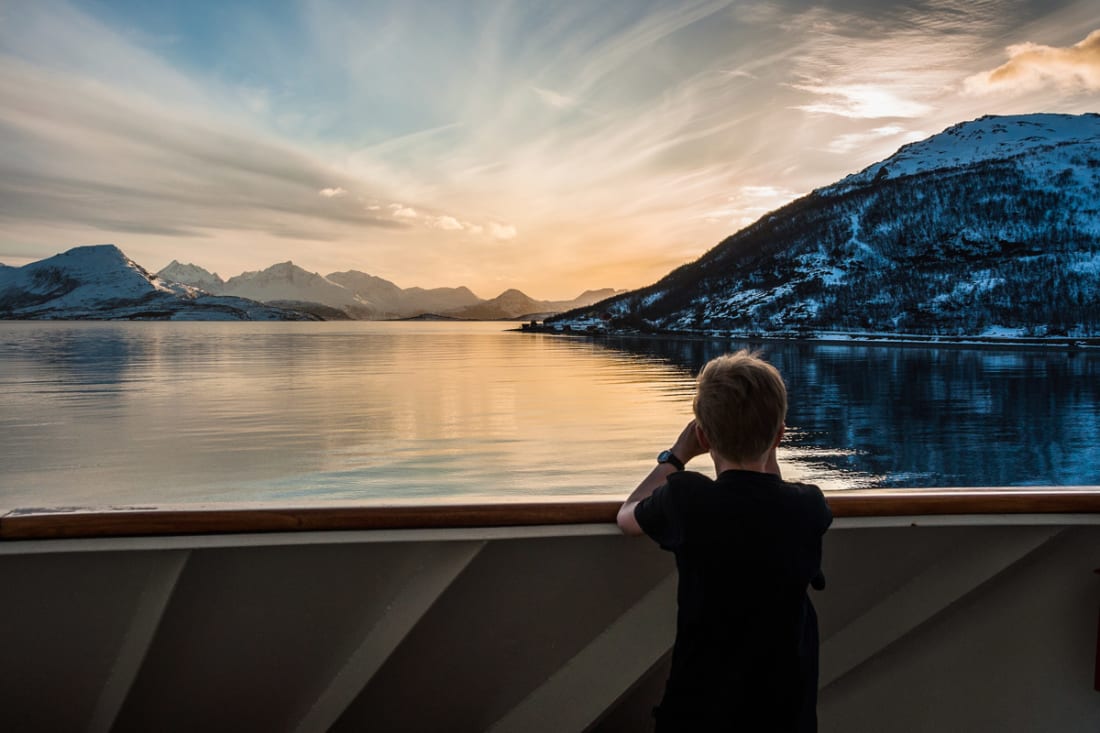
The southern coastline passes quietly by: low land, islands, and long stretches of water that invite stillness rather than attention. From the lounge, deck, or a quiet corner of the ship, there is time to observe how land and sea meet, how light changes through the day, and how the rhythm of the voyage begins to take shape.
Meals and coffee breaks provide gentle structure, but otherwise the day unfolds slowly, guided by weather, movement, and the simple act of being on the water.

Day 4 – Stavanger | September 27, 2026 (B, L, D)
We spend much of the day in Stavanger, a city shaped by maritime history and contemporary life. The old town, Gamle Stavanger, offers narrow streets lined with well-preserved wooden houses, while the cathedral — Norway's oldest — reflects the city's long continuity.
Time ashore is unhurried, allowing for walking, small cafés, or quiet observation along the harbour before returning to the ship.

Day 5 – Ålesund | September 28, 2026 (B, L, D)
Ålesund spreads across several islands at the mouth of the fjords. Rebuilt after the fire of 1904, the town is known for its Art Nouveau architecture, visible in curved lines, decorative details, and restrained colour palettes.
We return to the ship in the afternoon, the town's forms and colours still present — the kind of thing that finds its way quietly into a colour choice, or the way a pattern feels as it develops in the hands.

Day 6 – Rørvik and the Vikna archipelago | September 29, 2026 (B, L, D)
Rørvik is a small coastal town set among thousands of islands, skerries, and reefs. Its size belies a long history shaped by fishing, trade, and adaptation to the sea.
In the afternoon, we continue sailing north through the Vikna archipelago, where land and water interlace closely. During the night, we leave the Helgeland coast behind and cross the Arctic Circle.
Day 7 – The Lofoten Islands | September 30, 2026 (B, L, D)
The Lofoten Islands rise sharply from the sea, their peaks forming a dramatic contrast with sheltered harbours and fishing villages. We call at Svolvær in the morning.
An included excursion takes us to Henningsvær, a village spread across small islands connected by bridges.
Later, we visit Stokmarknes, where the Coastal Express was founded in 1893. The Hurtigruten Museum offers perspective on the route we are sailing — and on continuity, craft, and coastal life.

Day 8 – Tromsø | October 1, 2026 (B, L, D)
Set between mountains and sea, Tromsø is a vibrant city with an energy that feels lived-in rather than staged. Cafés, restaurants, and cultural life sit naturally alongside the world's northernmost university.
The ship remains in port for most of the day, allowing time to explore at your own pace. Optional excursions are available for those who would like added context.

Day 9 – The North Cape | October 2, 2026 (B, L, D)
On mainland Norway's northern edge, Honningsvåg is a small town open to the sea. From here, an included excursion leads to the North Cape, a broad plateau rising above the Barents Sea.
The globe monument marks a place many have imagined long before arrival. There is something quietly significant in standing there — and then turning south. The return journey begins in the evening.

Day 10 – Alta | October 3, 2026 (B, L, D)
Alta lies deep within a wide fjord system, surrounded by open landscape and long horizons. The area is known for clear skies and its strong association with Northern Lights observation.
A visit to the Alta Cathedral offers a quiet architectural counterpoint to the landscape. Its form and interior are shaped by light and season, echoing the presence of the aurora itself.

Day 11 – Narvik | October 4, 2026 (B, L, D)
Narvik sits where three fjords meet, defined by steep mountains and unusually deep water — deep enough that the port never freezes, which is why the town exists at all. Iron ore from the mines at Kiruna in Sweden has moved through here for over a century, by rail across the mountain border and down to waiting ships.
An included excursion takes us on the Ofotbanen, Norway's northernmost railway, running 43 kilometres from Narvik to Bjørnfjell at the Swedish border. Built in the late nineteenth century to carry iron ore from Kiruna to the ice-free port below, the line played a decisive role during the Second World War — particularly during the battles of Narvik. Today it remains both a working railway and one of the most remarkable train journeys in Norway.

Day 12 – At sea | October 5, 2026 (B, L, D)
The ship continues south along the Norwegian coast. Windswept islands, sheltered bays, and fjords pass by throughout the day. This stretch of coastline is also home to varied wildlife, and sea eagles are often seen along the shore or over the water.
It is a day spent on board, with time to watch the scenery pass by. Knitting is present in a low-key way, picked up when it suits and set aside again as attention returns to the view.

Day 13 – Åndalsnes | October 6, 2026 (B, L, D)
Åndalsnes lies at the end of the Romsdalsfjord, framed by steep mountains and narrow valleys. The surrounding landscape rises directly from the water, creating a strong sense of scale and stillness.
Time ashore is unhurried. Some walk through the town, others sit by the fjord, or simply take in the scale of the valley — letting the landscape speak for itself.
Day 14 – Bergen and Hillesvåg Ullvarefabrikk| October 7, 2026 (B, L, D)
We arrive in Bergen, Norway's former capital and a city shaped by trade, weather, and long maritime connections. North of the city, we visit Hillesvåg Ullvarefabrikk, Norway's oldest yarn mill, still run by the same family after four generations.
This is a working mill, where wool is handled with familiarity and long practice. The visit includes time to observe production, visit the factory outlet, and share a simple lunch together.
In the afternoon, there is time to walk through Bryggen, the UNESCO World Heritage-listed historic harbour district, before departure.

Day 15 – Kristiansand and Annemor Sundbø | October 8, 2026 (B, L, D)
Our final day ashore is spent in Kristiansand, Annemor Sundbø's native city. We visit her studio for a private encounter with one of Norway's most important voices in traditional knitwear and weaving.
This is not a lecture in the conventional sense, but a conversation — about garments, patterns, materials, and the cultural knowledge embedded in everyday textiles. Annemor's work connects research, practice, and preservation, offering insight into how Norwegian knitting and weaving traditions developed, travelled, and endured.
What is shared here often carries back on board — into hands, needles, and ongoing work — as ideas, structures, and histories quietly find their way into making.

Day 16 – Return to Oslo | October 9, 2026 (B)
We arrive back in Oslo early in the morning. The journey comes full circle — south to north, and back again.
After breakfast, we disembark and say our goodbyes, carrying with us the landscapes, conversations, and shared hours of making that shaped the North Cape Line.