B = Breakfast L = Lunch D = Dinner
Please note program is subject to changes
Day 1 Arrival in Bergen 27 July 2026 (D)
The journey begins in Bergen, where the city meets the sea and the mountains rise close behind. Arrival is by individual arrangements, with check-in at Clarion Hotel Havnekontoret, a former customs building that still carries the weight of goods once passing through its doors.
In the early evening, we gather in the lobby for a first meeting with ARNE & CARLOS. Later, dinner is shared at a traditional restaurant in the Bryggen area. The wooden buildings, narrow passages, and proximity to the water offer a gentle beginning — a place shaped by trade, weather, and departure.
Day 2 Hillesvåg and Leaving Bergen - 28 July 2026 (B, L, D)
North of Bergen lies Hillesvåg Ullvarefabrikk, Norway’s oldest yarn factory, still run by the same family for four generations. This is a working mill, where wool is handled with familiarity and long practice. The visit offers time to see the production up close and visit the factory outlet. Lunch is served here, simply and traditionally.
In the afternoon, the journey returns to the harbour for embarkation on MS Midnattsol, which departs Bergen at 14:30. The sail out of Bergen is calm and scenic, passing islands and skerries before reaching open water. Dinner is served on board in the Flora Restaurant as the voyage north begins.

Day 3 Åndalsnes and Trollstigen - 29 July 2026 (B, L, D)
At the end of the Romsdalsfjord, Åndalsnes sits where the water narrows and the mountains rise sharply on all sides. The town was rebuilt after the Second World War and is today a modern settlement, shaped less by its architecture than by its dramatic setting.
From Åndalsnes begins the included excursion to Trollstigen, meaning the Troll Ladder. The road follows the natural shape of the mountains as it moves through the valley, passing waterfalls and open viewpoints along the route. It is known not for spectacle, but for the way it sits within the landscape, shaped by terrain, engineering, and local folklore.
The return is unhurried, with a sense of having spent time within the landscape rather than merely passing through it.

Day 4 Træna 30 July 2026 (B, L, D)
At the edge of the Arctic Circle, Træna forms an archipelago of hundreds of small islands, skerries, and low rocks scattered across open sea. Only a few of these islands are inhabited year-round, and life here has always followed the conditions set by coast and weather.
People have lived in Træna since the Stone Age, drawn by fishing grounds and abundant birdlife. Seabirds and sea eagles remain central to the islands, and the careful gathering of eiderdown has been part of coastal tradition here for generations. Buildings sit low and close to the shore, responding quietly to wind, light, and sea.
Later in the day, the ship continues north, crossing the Arctic Circle and moving further into Arctic waters.

Day 5 Reine and the Lofoten Islands - 31 July 2026 (B, L, D)
As we approach the Lofoten Islands, steep mountains rise directly from the sea, and the coastline breaks into narrow sounds and sheltered inlets. This is a landscape shaped by fishing, weather, and light, closely tied to the rhythms of the sea.
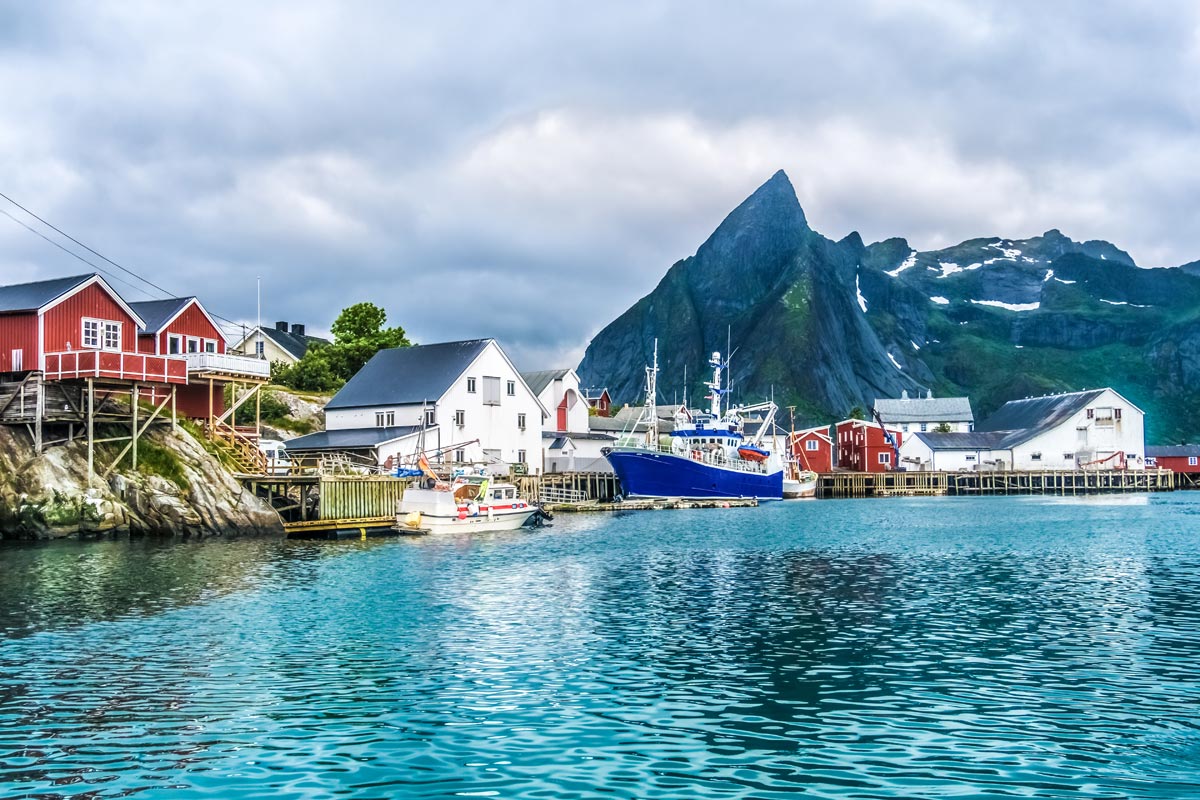
The ship docks in Reine, an important fishing village dating back to 1743. Along the shoreline stand rows of red-painted rorbuer — traditional fishermen’s cabins built on stilts over the water — set beneath sharp mountain ridges reflected in the fjord.
At the western tip of the archipelago lies Å, one of the best-preserved fishing villages in Norway. An optional visit offers insight into everyday life shaped by fishing over centuries, with the Norwegian Fishing Village Museum giving quiet context through buildings, tools, and interiors.
Day 6 Tromsø - 1 August 2026 (B, L, D)
Set between mountains and sea, Tromsø is a vibrant city with an energy that feels lived-in rather than staged. Cafés, restaurants, and cultural life sit naturally alongside the world’s northernmost university, giving the city a sense of movement and curiosity. It is often called the Paris of the North, less as a claim than as a reflection of how long city life has mattered here.
The ship remains in port for most of the day, allowing time to explore at your own pace — along the waterfront, through small shops, or simply observing daily life. Optional excursions are available for those who would like added context.

Day 7 Honningsvåg and the North Cape- 2 August 2026 (B, L, D)
On mainland Norway’s northern edge, Honningsvåg is a small town open to the sea, shaped by weather and working life. From here, an included excursion leads to the North Cape, a broad plateau rising above the Barents Sea.
At the edge stands the familiar globe monument, quietly marking a place many have imagined long before arriving. The North Cape Hall offers exhibitions and a short film for those who wish to place the site in context. That same evening, the ship departs Honningsvåg and rounds the North Cape from the sea — a powerful perspective, as the cliffs rise sheer from the water. We continue northward into the high Arctic, leaving the Norwegian mainland behind.

Day 8 At Sea, toward Svalbard - 3 August 2026 (B, L, D)
This day marks a clear shift away from mainland Norway. With land falling behind, the sense of distance begins to change, and the sea opens out in every direction. Time stretches differently here, shaped by light, horizon, and movement rather than by landmarks.
In the afternoon, Bjørnøya — Bear Island — comes into view. Part of the Svalbard archipelago, it lies roughly halfway between mainland Norway and Spitsbergen. The island takes its name from a polar bear once spotted swimming nearby, an unlikely sight this far south. Low, rocky, and largely inaccessible, Bjørnøya appears briefly before slipping past again, offering a quiet signal that the journey has entered Arctic territory

Day 9 Spitsbergen and Longyearbyen - 4 August 2026 (B, L, D)
The day brings arrival at Longyearbyen, on the island of Spitsbergen, the largest and only permanently inhabited island in the Svalbard archipelago. This is no longer mainland Norway, but the High Arctic — far north of the familiar coast and much closer to the North Pole than to most European cities.
The landscape here is strikingly open. Broad valleys stretch toward the sea, mountains stand bare and sharply outlined, and Arctic tundra lies exposed under the summer light. Longyearbyen began as a coal-mining settlement in the early 20th century and is today home to around 2,000 residents from many parts of the world. Daily life is shaped by research, logistics, and scientific work connected to the Arctic environment. Built discreetly into the mountainside nearby lies the Global Seed Vault, a quiet reminder of the town’s role in long-term global stewardship.

Day 10 Kongsfjorden and Ny-Ålesund - 5 August 2026 (B, L, D)
Kongsfjorden is among the most beautiful and distinctive fjords in Svalbard. Glaciers descend toward deep water at its entrance, and the surrounding mountains rise in broad, sculpted forms. Wildlife is often present here — walruses resting along the shore, seabirds moving through the air, and sometimes Arctic foxes or Svalbard reindeer visible on land. Beluga whales are occasionally seen surfacing quietly in the fjord.
At the far end lies Ny-Ålesund, the world’s northernmost permanent settlement. Once a coal-mining outpost, it is now devoted entirely to international climate and environmental research, hosting scientists from many countries during the summer months. Access is normally restricted, lending the visit a sense of quiet privilege and restraint that fits the setting.

Day 11 Leaving the High Arctic - 6 August 2026 (B, L, D)
This day allows the experience of Svalbard to settle before the journey turns south again. The Arctic landscape remains present — open water, long horizons, and a light that still feels distinct from anything further south.
This is also the final day of the journey when the midnight sun can still be seen. The light lingers through the night, soft and steady, offering one last opportunity to experience the continuous daylight of the High Arctic.
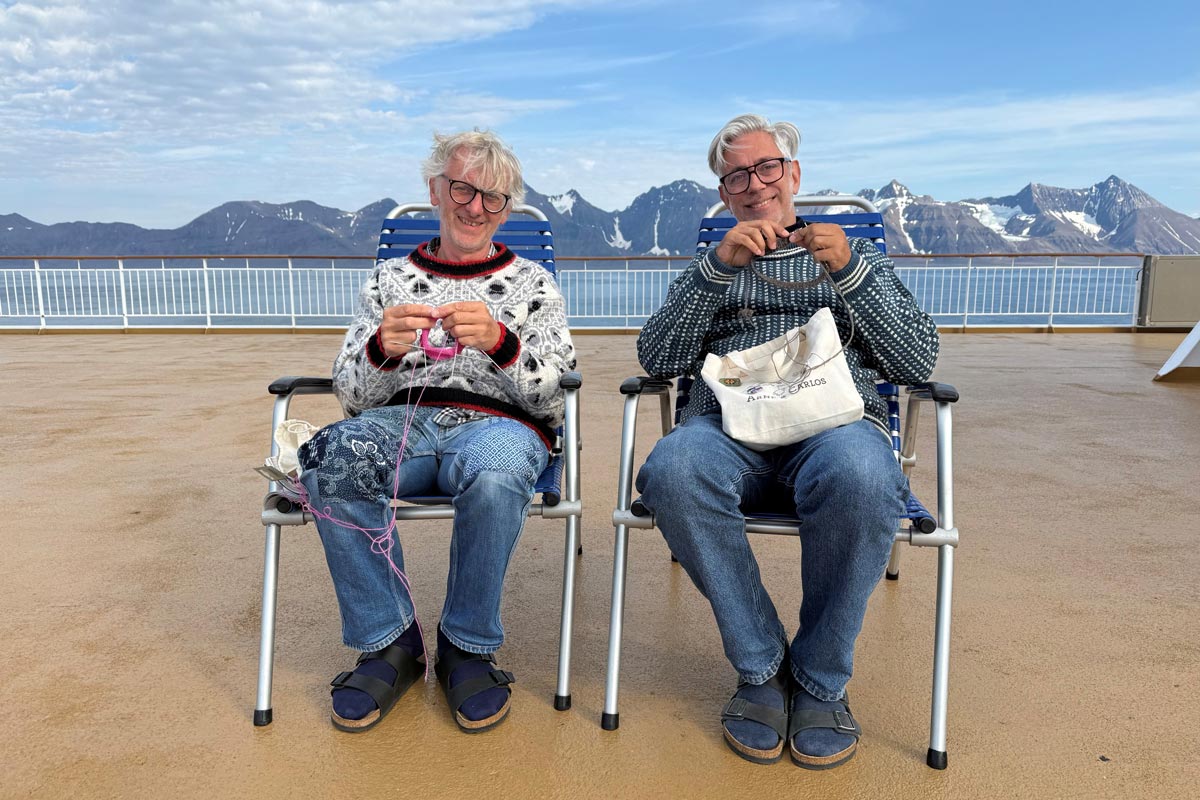
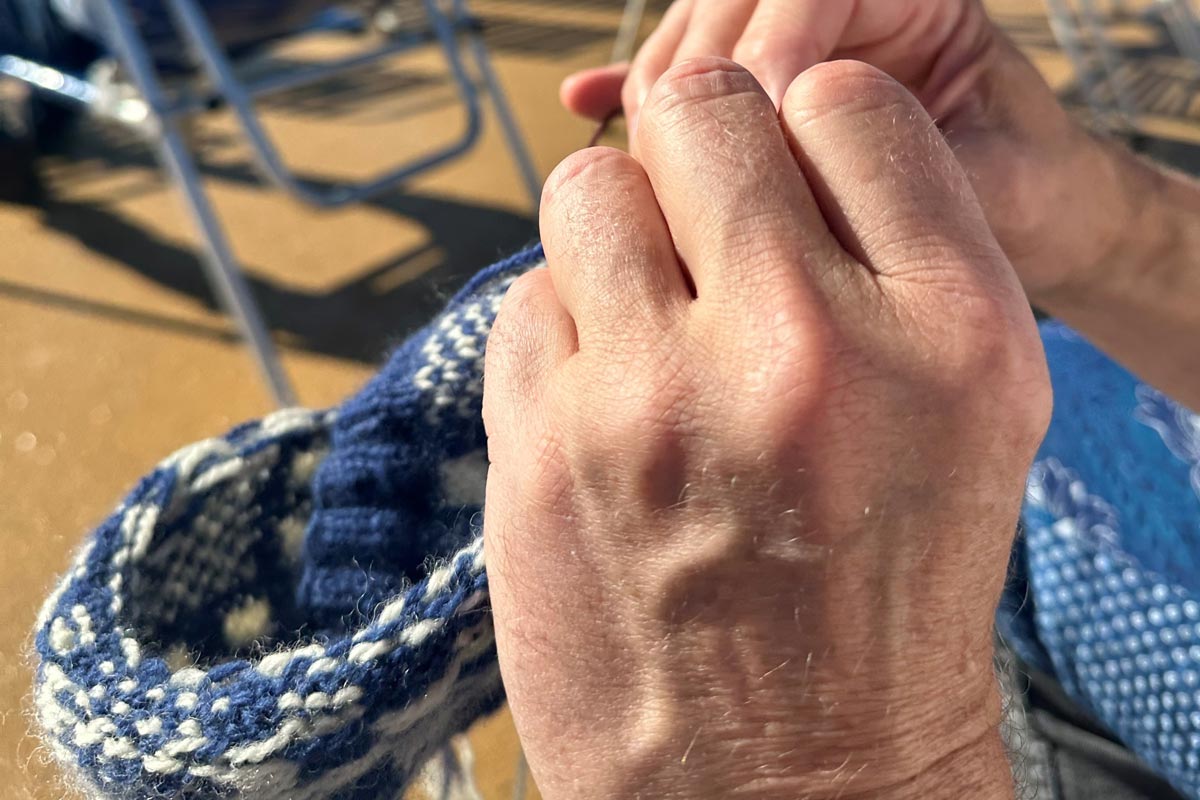
Time is unstructured and calm. Some spend hours on deck, others knit, read, or sit in conversation. The Coastal Experience Team offers lectures and insights into Arctic wildlife and history, and ARNE & CARLOS give a lecture during the day. It is a pause that feels intentional, allowing space to absorb what has been seen and shared.

Day 12 Tromsø and Senja - 7 August 2026 (B, L, D)
After time in the Arctic, Tromsø returns with a different sense of scale, lively and familiar, framed by mountains and water.
Further south lies Senja, one of Norway’s largest and most varied islands. Mountains rise steeply from the sea before softening into beaches, fjords, and open coastline. Sea eagles are often seen along the shore, and wildlife feels woven into the landscape. The day offers a gentle transition back toward the mainland.

Day 13 Svolvær and Henningsvær - 8 August 2026 (B, L, D)
The day unfolds in the Lofoten Islands, where fishing villages sit close to the water beneath towering mountains. From Svolvær, an included excursion leads to Henningsvær, a charming village spread across several small islands connected by bridges.
Despite its dramatic setting, the village feels intimate and human in scale. This is a curated yarn day organised by ARNE & CARLOS, with visits to Lofoten Wool and another local yarn shop. Time is also set aside for coffee and freshly baked buns in a local café.

Day 14 Bessaker - 9 August 2026 (B, L, D)
The Helgeland coast gives way to a quieter stretch of shoreline as the ship continues south. Here, the landscape opens out gently, with scattered islands, open water, and a sense of space that feels unhurried and expansive.
In the afternoon, we arrive in Bessaker, a small coastal village in Trøndelag. With only a few hundred residents, Bessaker is shaped by fishing traditions and close ties to the sea. The surrounding waters are rich, and the village has long been known for its strong local community and maritime life.
Time ashore is relaxed and unstructured, allowing guests to explore at their own pace. This quieter stop provides a welcome contrast to the dramatic stretches of coastline further north — a chance to slow down, observe, and experience a small Norwegian coastal community from the inside.
Day 15 Ålesund and Hjørundfjord - 10 August 2026 (B, L, D)
A stop is made in Ålesund, often considered the most beautiful city in Norway. After a devastating fire in 1904, the town was rebuilt entirely in Art Nouveau style, creating a distinctive architectural harmony set against sea and mountains.
The day continues into Hjørundfjord, one of the most majestic fjords in Norway. The Sunnmøre Alps rise steeply from deep water, enclosing the fjord in a way that feels powerful and deeply moving. The final evening is marked with cocktails and a farewell dinner shared together.

Day 16 Return to Bergen - 11 August 2026 (B)
Arrival in Bergen comes early in the morning. After breakfast, it is time to say goodbye to the crew, fellow travellers, and ARNE & CARLOS.
The journey ends where it began, carrying home landscapes, conversations, and shared experiences.